Irina Razumovskaya
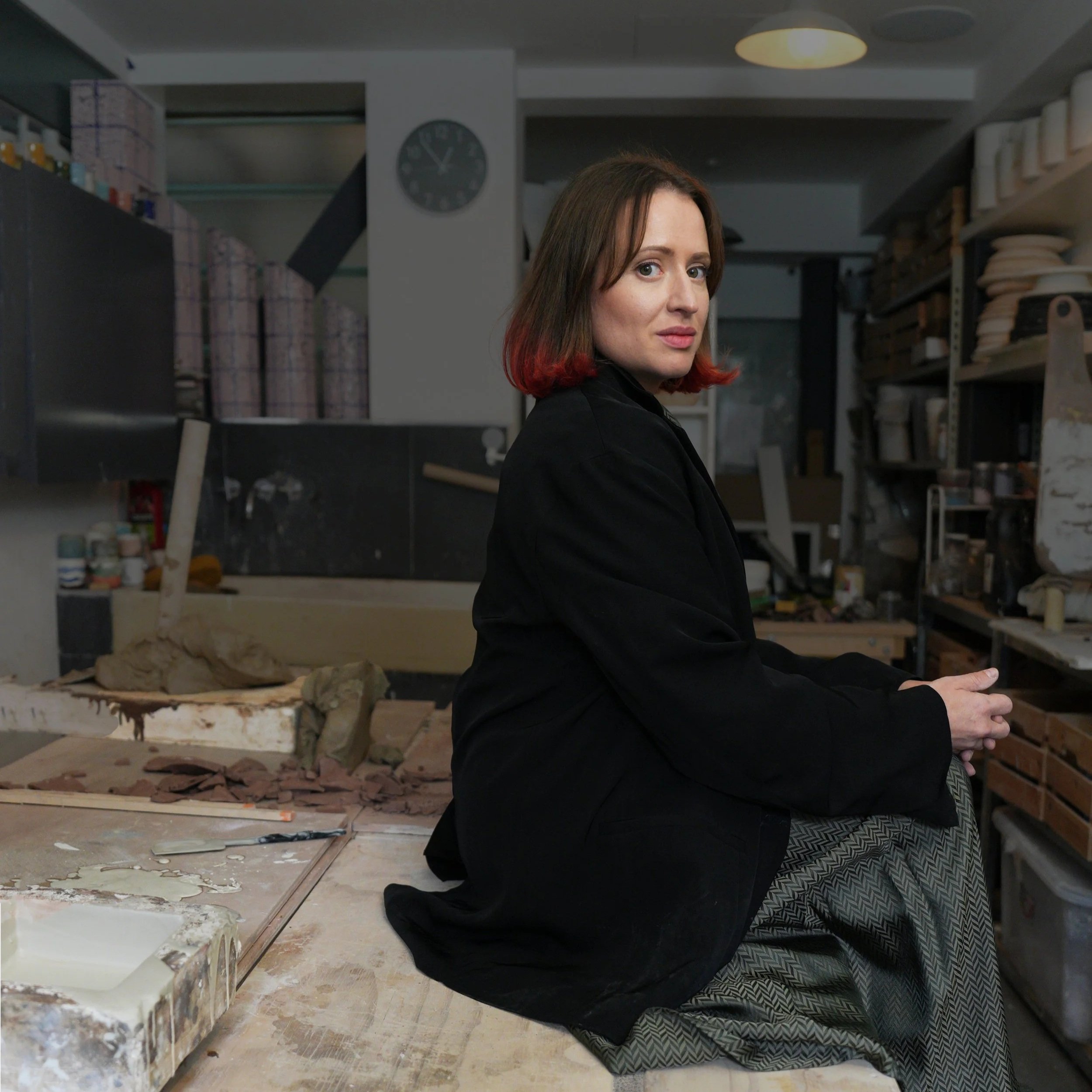
Irina Razumovskaya is a London-based artist whose sculptural practice engages with endurance, fragility and transformation. Working primarily with hand-built ceramics, she draws on the shared language of geology and the body, using clay as a material that registers pressure, memory and time. Across her work, decay is approached not as loss, but as a condition through which form, meaning and continuity are reshaped.
Razumovskaya has been recognised in international competitions including the Loewe Craft Prize, the Mino Ceramic Competition and the Faenza Prize, and is a recipient of several awards including First Prize at the Westerwald Museum in Germany. Her works are held in public collections including Chatsworth House, the Mashiko Museum of Ceramic Art, the Yingge Ceramics Museum, the Icheon World Ceramic Center and the Museum of Fine Arts in Lyon.
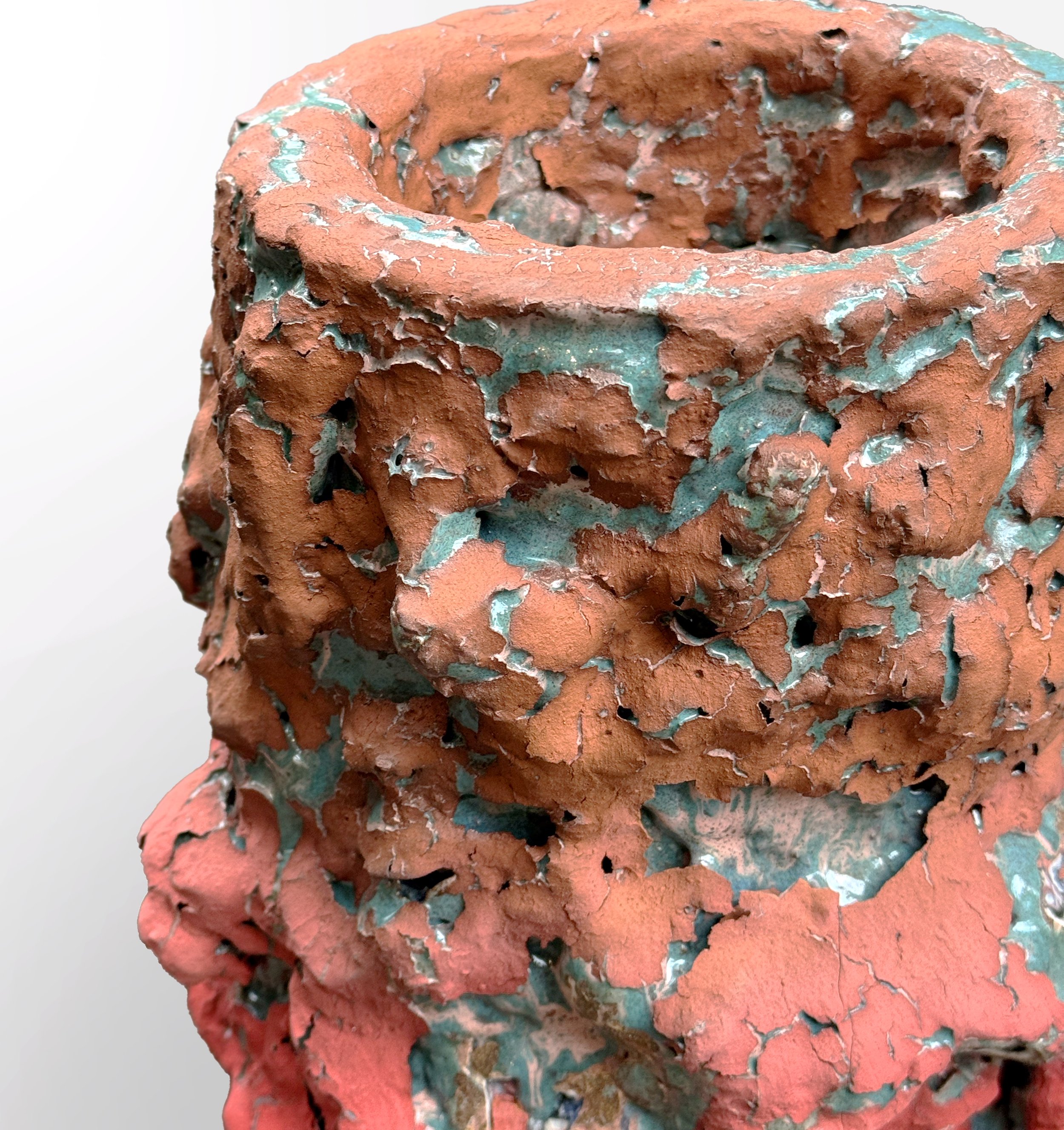
Fertile Earths
Terracotta, porcelain, raw mineral
Irina Razumovskaya rejects the notion of clay as a merely pliant medium, viewing it instead as a mineral condition in transit, as a substance defined by its precarious position on the continuum between sediment and stone.
By shifting the focus away from clay’s traditional identity as a "soft" substrate, she repositions the ceramic process as an inquiry into the very life cycle of the earth’s crust. Her methodology is an exercise in accelerated geology; within the kiln, Razumovskaya mimics the deep-time processes of the planetary furnace, creating a situation where minerals flux, melt, and migrate.
This approach deliberately disrupts the inherited language of ceramics. Rather than asking the material to "behave," Razumovskaya pushes it toward its mineral identity, treating fracture and consolidation as expressive truths.
In the series Fertile Earths, each form registers a tension shared by the earth, the human body, and the built environment. Surfaces are intentionally unsettled: peeling, warping, and cracking like the strata of an arid landscape, yet beneath these abraded skins lie structures built with a rigorous architectural logic of balance and load.
This duality exposes a shared vulnerability: the desire of both buildings and bodies to endure, even as that endurance is compromised by the slow, inevitable violence of time. By aligning the immediate restructuring of the kiln with the decadal aging of the body and the centurial erosion of architecture, Razumovskaya suggests that the cost of existence is erosion. She treats this exposure not as damage, but as a profound act of care, implying that what truly lasts is the material that fully invests itself in the world, allowing itself to be shaped and weathered by the environment it inhabits.
The Material Laboratory
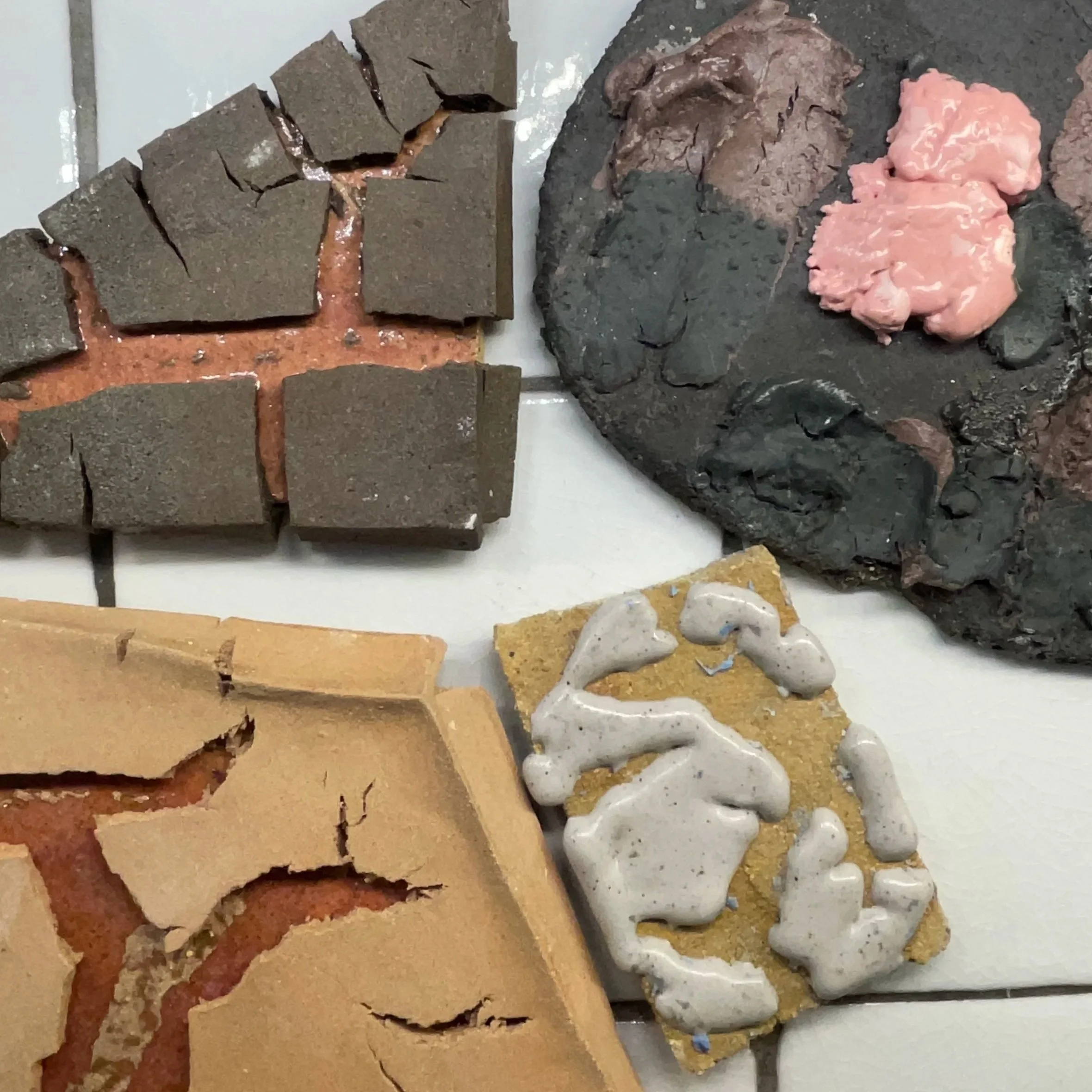
Presented alongside the sculptures is the "material laboratory," a supplementary display that functions as a physical taxonomy of Razumovskaya’s process. This is not merely explanatory décor, but an extension of the work’s core argument. Through collected fragments, tests, and residues, the laboratory enacts an artificial recreation of geological processes such as compression, crystallization, and erosion. It makes the invisible visible, demonstrating how clay and glaze transform in the kiln into rocky forms that retain the traces of chemical reaction as clearly as they do the maker's touch. By breaking down the ceramic object into its constituent mineral chemistry, the laboratory serves as the empirical anchor for the series, proving that the stony realities of the finished work are the direct consequence of a staged geological event.